

The quick answer
Machine wash Norwex microfiber separately or with other lint-free laundry, using a Norwex laundry detergent, then dry it completely. Never use bleach, fabric softener or dryer sheets; they coat the fibers. Between washes, rinse a lightly used cloth under warm running water with a little Norwex Dish Soap and hang it open to dry. A few cloths contain lyocell and need gentler settings, so check the care label (details below).
That’s the routine most people need. If you want the larger picture of cloth types and how they work, start with The Ultimate Guide to Norwex Microfiber . This article stays focused on washing, drying, and protecting the fibers.
In our house, the mop pads work the hardest. We mop more than 2,000 square feet of hardwood every day, with three Chesapeake Bay Retrievers in the house, so good microfiber care isn’t optional for us. It’s what keeps those pads picking up dog hair and dirt instead of pushing it around.

Start with the care label
The most important update is that one care rule doesn’t fit every Norwex textile. Some microfiber products contain lyocell and require cold water, a gentle cycle, and low dryer heat. Standard microfiber has a different routine.
You don’t need to memorize which material appears in every product. Check the sewn-in care label before you wash it. If several items share one load, use settings that are compatible with the most restrictive item in that load.
Hotter is better isn’t a reliable universal rule. Heat that may be acceptable for one cloth may be wrong for another. The product label is more useful than an old rule of thumb.
Lyocell cloths: wash cold, dry low
Machine wash cold on a gentle cycle and tumble dry low, or hang to dry. Between washes, rinse under cool running water with a Norwex detergent or Dish Soap.
Wash new microfiber before the first use
Machine wash and dry new microfiber before you use it the first time. Follow the care label for the wash cycle and dryer setting. This prepares the textile for normal use and gives you a clean starting point for the routine below.
Care after light everyday use
A cloth that handled light, ordinary soil doesn’t always need an immediate machine cycle. Rinse it promptly so soil and product residue don’t sit in the fibers.
Standard microfiber: Wash under warm running water with a small amount of Norwex Dish Soap when needed. Agitate the cloth, rinse thoroughly, and hang it fully open to dry or dry it completely.
Lyocell microfiber: Use cool running water and a compatible Norwex detergent or Dish Soap. Rinse thoroughly, and hang it open to dry or dry it on low.
Don’t leave a damp cloth folded on a counter, in a wet heap, or buried in a hamper. If you air-dry a darker cloth, hang it rather than laying it on a surface because color from damp microfiber may stain that surface.
When to machine wash
What the cloth cleaned matters more than the calendar. Norwex specifically advises machine washing after extra-dirty kitchen or bathroom tasks. I also machine wash when a cloth is greasy, visibly soiled, no longer rinses clean, or develops residue or odor.
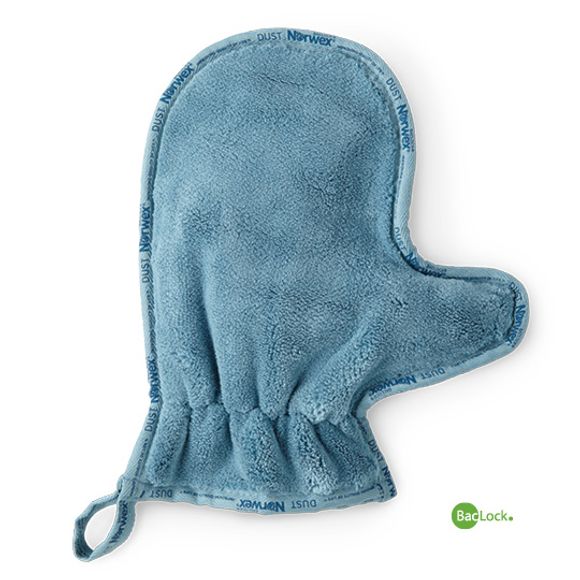
A dry Dusting Mitt or mop pad may not need a full machine cycle after every light use. Remove loose debris as directed, and launder it when it becomes dirty. Norwex also recommends its Rubber Brush between washings for dry Mop Pads, the Entry Mat, and the EnviroWand sleeve.
I don’t tell every reader to wait exactly one week and I don’t tell every reader to wash after every wipe. A kitchen cloth that picked up grease and a lightly used dusting product did different jobs. Care for the soil that’s actually in the textile.
What to wash microfiber with
Wash microfiber separately or with other lint-free laundry. Sheets and smooth clothing may be compatible when their care settings match. Terry towels, fuzzy blankets, and pet bedding can shed lint that becomes trapped in the microfiber. Wash dark colors separately.
For best results, use a Norwex laundry detergent. I wouldn’t treat every detergent without bleach as automatically compatible because formulas and additives vary. Use only the amount needed, and rinse thoroughly. More product doesn’t make microfiber cleaner when excess detergent remains in the fibers.
Fragrance alone doesn’t decide whether another detergent will work well with microfiber. If you want the most direct care path, use a Norwex laundry detergent and keep the three coating or damaging products below out of the load.
Keep these products away from microfiber
Bleach: It can damage microfiber. Don’t add it to a microfiber load.
Fabric softener: It coats the fibers and can reduce their ability to clean effectively.
Dryer sheets: They can leave a coating on the fibers. Don’t place one in the dryer with microfiber.
If you’ve used dryer sheets in the past, residue can build up inside your dryer. Air-dry your microfiber, or wipe out the dryer drum with hot, soapy water and an old rag (not microfiber) and rinse the lint screen before drying microfiber there.
If an accidental exposure happens, don’t replace everything automatically, and don’t assume it’s fine. Wash the item correctly without the coating product, rinse thoroughly, and evaluate how it absorbs, wipes, and rinses. Persistent repelling, smearing, odor, or visible damage is a reason to troubleshoot before returning it to its original job.
How to dry Norwex microfiber
Dry the textile completely. That’s the consistent goal. Standard microfiber may be hung to dry or dried as its label directs. The hottest dryer setting isn’t best for every standard microfiber product.
Lyocell requires low heat. Tumble dry it on low or hang it open to dry. Don’t apply an older high heat recommendation to a lyocell product.
Complete drying matters because a damp bundled cloth can hold soil and develop odor.
What BacLock changes and what it does not
BacLock is antimicrobial protection within certain Norwex products. It helps inhibit the growth of odor-causing bacteria, mold, and mildew inside the product. The microfiber performs the surface cleaning.
BacLock doesn’t replace rinsing, drying, or laundering. A cloth that collected grease, heavy soil, or a messy bathroom job still needs appropriate care. It’s also not permission to move a loaded cloth from one task to another without turning to a clean side, rinsing, or laundering as the job requires.
For the complete distinction between surface removal and product protection, read Does Norwex BacLock Actually Remove 99 Percent of Bacteria . My How Norwex Microfiber Works article explains the physical cleaning mechanism in more detail.
How to deep clean Norwex microfiber when routine washing isn’t enough
If a cloth smells, feels waxy, repels water, or leaves streaks after correct laundering, first look for trapped grease, detergent residue, fabric softener, dryer-sheet coating, or incomplete drying. Correct the routine before adding more products.
If the problem is specific to glass, my Norwex Window Cloth review explains how excess water, dirty glass, or a damp polishing cloth can contribute to streaks.
For a tough stain: Norwex allows pretreating with Laundry Stain Remover or using Microfiber Cleaner Laundry Booster as directed. That’s a troubleshooting step rather than a weekly ritual.
If a cloth still smells or feels coated after correct washing and drying, a deep clean may help. For compatible standard microfiber, Norwex’s Microfiber Cleaner Laundry Booster directions call for one full scoop (30 ml) dissolved in a gallon of hot, not boiling, water, with up to ten cloths soaking for 30 minutes before you rinse well. Check the care label before using a hot soak on lyocell.
Use my Stinky Norwex Cloths troubleshooting guide for the verified deep-clean method and the important lyocell limitation. I don’t recommend boiling or microwaving microfiber or improvising with vinegar, baking soda, oxygen bleach, essential oils, or an extended hot soak.
How long microfiber lasts
Norwex currently provides a two-year warranty on its microfiber products, subject to the company guarantee. That isn’t the same as promising that every cloth lasts exactly two years, and it isn’t a 500-wash guarantee.
Use condition and performance to decide when a cloth changes jobs or is retired. Tears, unraveling, permanent roughness, retained odor that survives correct care, or a continuing failure to absorb and pick up soil after residue removal all matter more than counting washes.
A worn cloth may still be useful for a lower-risk garage, entryway, or utility job. I’d rather move a cloth to an appropriate final job than keep using a damaged or unidentifiable cloth on a surface where performance matters.
My practical bottom line
Good microfiber care isn’t complicated once you stop trying to force every product into one temperature rule. Identify the textile, remove soil without coating the fibers, and dry it completely.
For standard microfiber, remember warm rinse, lint-free laundry, and complete drying. For lyocell, remember cold, gentle, and low. For both, keep bleach, fabric softener, and dryer sheets out of the routine.
If routine washing is working, you probably don’t need another product. If odor or buildup remains, use the troubleshooting guide before buying or trying something new.
Your next step
If you need a current laundry or microfiber care product you can shop through my Norwex store . If you’re unsure what your cloth needs, contact me before you order. I’d rather help you choose one useful product than sell you something you don’t need.
Disclosure: I’m a Norwex Independent Consultant and may earn a commission from purchases made through my store. My recommendations come from years of using Norwex microfiber in my own home and helping customers care for theirs.
Frequently asked questions
Can I wash Norwex microfiber with regular laundry?
Yes, when the other items are lint-free and compatible with the microfiber care label. Avoid terry towels, fuzzy blankets, and other lint-producing loads. Wash dark colors separately.
Should I wash Norwex microfiber in hot water?
Not as a universal rule. Standard microfiber and lyocell have different instructions. Lyocell requires a cold gentle cycle. Follow the label for the exact product.
Can Norwex microfiber go in the dryer?
Many items can be machine dried but the setting depends on the textile. Lyocell requires low heat. Never add a dryer sheet and always follow the product label.
Can I use a regular laundry detergent?
A Norwex laundry detergent gives the best results. Third-party formulas vary, so I don’t promise that every detergent is equally compatible. Avoid bleach, fabric softener, and dryer sheets, and use only the amount needed.
Does BacLock mean I can wash the cloth less often?
No. BacLock helps protect certain products from odor-causing bacteria, mold, and mildew within the product. It doesn’t replace rinsing, complete drying, or laundering after heavy soil.
Should I boil my Norwex cloths?
No. I don’t recommend boiling Norwex microfiber. Norwex’s own deep-clean directions call for hot, not boiling, water, and lyocell microfiber has cold-water care limits. If a cloth smells or feels coated after correct washing, use the deep-clean soak described above instead.
~ Suzanne
Purchase Products In This Post:









My consultant said she uses about 2 tsp for a normal size load.
Many people use 1 – 2 teaspoons of Ultra Power Plus in a high efficiency machine.
Great article, love all the detailed information! One additional thought on detergents.. I always was taught to avoid detergents with fillers due to the ability they have to coat the microfibers, in turn making them less an absorbent. I found your article while looking for information about how fragrance may affect the cloths. I wanted to try a random brand of the new biodegradable sheet style detergent and was looking to decide if I should choose fragrance or avoid it. Love to hear your thoughts on fillers and fragrance!
Hi Tami! The care instructions do not give one universal rule for every fragrance or third-party detergent formula. For best results, I recommend Norwex laundry detergent. Avoid bleach, fabric softener and dryer sheets, and use only the amount of detergent needed so residue does not build up in the microfiber.
when i do a deep clean, i still throw them in the washing machine to get a more thorough rinse! seems to do the trick
I have been washing my daughter’s Kids Norwex Bath Towel with other towels and it’s full of lint and fuzzies. Have I ruined it? I thought about buying the rubber brush to see if I could brush some of it out with that? I just deep cleaned it and it doesn’t look improved at all.
Hi Madi! Microfiber can collect lint when it is washed with cotton towels or other lint-producing fabrics. Wash it separately or with other low-lint microfiber items, then gently remove any remaining fuzz by hand. Avoid fabric softener and dryer sheets.
I am a brand new customer and just received my norwex products today. I have had a history of trying environmentally friendly detergents and have hated all of them. So I did not purchase the dish liquid. Can I still use palmolive oxy dish detergent to wash my dishes with the enviro scrub or netted dish cloth? And in regards to cleaning my cloths with a little dish liquid when done, can I use the palmolive on those as well?
I might get some environmentally friendly dish liquid a try this week.
I’m not familiar with the ingredients in pamolive. You could use it with the netted dish cloth but I’d probably stay away from using it with our microfiber. Thanks.
Did you ever hear back on whether or not microwaving destroys the silver in the cloths?
No, I don’t have an answer for that, but I don’t recommend microwaving them. There isn’t a need for it.
Hi Wynnie. I love that you’re looking for such a healthy way to take care of the little kiddos in your church! The plan you’ve outlined sounds good to me. Please let me know how it goes.
Hi, I’m assuming when she says doterra she is referring to an oil? If so, is that allowed? I thought these weren’t supposed to be used with oil
Norwex Newbie here! I wanted to thank you for this blog post and all the feedback to the questions and comments. This has been a wealth of information and I feel better equipped in using my Norwex starter kit now. Thank you so very much!!
Thank you so much! Stop back again. 🙂
We use Trader Joe’s laundry soap and dish soap.I just received my order and love it. I washed some yesterday bec they got smelly,but it still is smelly. I don’t have a dryer so had to dry outside. My laundry soap has some lavender oil in it. Is that a problem?I omitted the Borax,bec was told not to add any. Thanks for your help.
My son put body was on my body cloth with it hurt it i washed it out with hot water….
That’s no problem, Gale! It won’t affect your Norwex Body Cloth. It’s repeated exposure that creates a build-up that can cause problems!
Hi! I’m a brand new consultant and got my mop yesterday. I used the chenille dry mop in my kitchen and it left a pile of dirt on my floor when I was done. We have cats and when I tried to dry mop the litter it still left the fine litter particles on the floor and only pushed around the larger pieces of litter. I did the figure 8 motionoke recommended. Any ideas on why it isn’t working? Thanks!
While the Norwex dry pads pick up some crumbs and large pieces of debris, they never pick up all of them. They’re meant to grab onto dust and hair, mostly! I always push the large particles into a pile, and either sweep them up with my broom, or grab a damp EnviroCloth to clean them up.
Hello. I live in another country and we don’t have hot water with our washing machine. I love the body cloths, but just washing them in cold water seems to leave them smelly. Also, we have high humidity so it takes forever for clothes and towels to dry, which can also leave them smelly even if they were just washed. How do you recommend I clean my towels and dry them after each use?
I would recommend adding a scoop of Microfiber Cleaner & Laundry Booster to your load of laundry. Since you don’t have hot water in your washing machine, you will need to dissolve and activate the Booster in 1 cup of very hot tap water first, then add it to your washing machine. If you do this every onece in a while, it should help you freshen them up!
Hi! I find your info the most helpful I’ve read. You’re very detailed which I like. Is there a way I can ‘follow’ you or subscribe so I get all your tips? I have a Norwex consultant but she doesn’t publish a blog like this.
Hi Vicki – if you scroll down the blog page, you’ll see a ‘Subscribe’ block on the right hand side, just a little ways down. You can enter your info into there, and you’ll receive an email every time there’s a new post! If you want to follow me on social media, click the social media buttons at the very top of the blog, to follow me on there!
Is it really necessary (for the cloths to last long) to rinse them out with Norwex dish soap every night? Or Can I just rinse it out.
Hi Karina – your clothes will still last a long time if you just rinse with water. Rinsing out with soap gets them that little bit extra cleaner, and means you can do laundry less often! Thanks for stopping by!
I suspect the brown water was not the gunk coming out of the cloth but perhaps the reaction of the Stainless steel pot (if you used SS) with the silver in the cloth. The same thing happened to me. What kind of pot did you use? Curious.
As long as you’re not using the softener in your Norwex-specific load, you should be fine, Sandy!
In my ‘unofficial’ instructions, I mention you can use any laundry detergent because based on customers that have used any detergent with their Norwex, they have found that their cloths still work effectively. Norwex does ‘officially’ recommend a detergent with no fillers because it helps the cloths last longer. It’s a good ‘maintenance’ policy to use a detergent with no fillers. But you don’t HAVE to use a special detergent with these products. The cloths aren’t going to be ruined from it, but it is recommended. You DO want to avoid Bleach, Fabric Softener and Dryer Sheets definitely though, as they DO affect the performance of the cloth. Know that the Norwex Ultra Power Plus laundry detergent is an awesome detergent, that also helps save you money, so it’s totally worth the switch!
I accidentally washed mopping pads in Tide. Are they ruined?
No; they should be fine.
When you use soap that is NOT the same as the one Norwex recommends to wash their products you will get a smelly cloth sooner. I’ve washed mine sooner when I used Dawn. But now that I only use the UPP Laundry Detergent my clothes last for about 2 wks
What is UPP DETERGENT?
Norwex Ultra Power Plus Laundry Detergent.
I bought the car washing set for my husband and just found out that each piece is made in China instead of USA or Canada…did I get scammed? Bought them at a flea market where a consultant was demonstrating and taking orders for Norwex products and party bookings.
What about OxyClean? I typically throw a little of that in with each load of clothes, and just put some Norwex in with my clothes without thinking about it.
I’m not sure what all of the ingredients are in OxyClean but I would recommend not using it with your Norwex cloths. Thanks for stopping by!
How necessary is it that I put my microfiber in the dryer? I like to line dry.
Line drying should be fine, especially if they get sunshine every once in a while.
Can you tell me how to wash the dish mat?
Hi Carla,
You can launder the dish mat in your washing machine! Just avoid using bleach, fabric softener or dryer sheets!
I washed and dried my Norwex dusting mitt, tide concentrate no bleach. When I dusted a glass shelving unit it was just smearing the dust around. What did I do wrong and how can I fix it?
Try rubbing your Dusting Mitt vigorously with your hands, before dusting, to create a static charge which will help the dust stick to the mitt. I do this every time before I dust!
Thank you for all the helpful information. I just love the products!!
Why, when dusting with my Norwex mitt does it tend to leave a trail of dust on the last swipe? The same thing happens with my long handle dusting tool too.
This happens to me sometimes too Ruth. I take it as a sign that I need to shake out my mitt or wand. Sometimes, if this reoccurs, I will get them slightly damp to help with the problem!
I really like the Enviro cloth and window cloth. I have talked them up so much to my friends, they all ordered them from my daughter in law at her party! I finally have windows that are not streaked. I have never done more than rinse them thoroughly after using. I’m glad to read here that I can wash them in the washer (without bleach or softener) if I think they look like they need it. The consultant said to just use water to rinse them and allow them to dry. I also like the white vinegar idea. Thanks for the info.
Hey Lee, I’m so glad to hear that you love the Norwex products! Although bleach isn’t good for the microfiber, I don’t think you’ve ruined your cloths. I have cloths that are still highly effective for cleaning but are definitely not fluffy anymore… unfortunately, the loose their fluffiness rather quickly. If you think that you have fabric softener on them, you can soak them (for about 1 hour) in white vinegar, which will help to strip them of any built up residue. This might help them fluff up a bit.
Unfortunately Tammy, I have this same problem, especially with waterproof mascara. I’ve found that the mascara washes out of the cloths better when they are new, but when they get older, like you mentioned, the mascara seems to stick. If you have the Norwex Dishwashing Liquid, it seems to be the best for getting it out of the cloths, although still not perfect. Wish I had better news for you.
I use the norwex stain remover on mine. Put it on and give it a rub together and the mascara releases beautifully!
You definitely can use vinegar in the rinse water when using the Norwex Laundry Detergent… I frequently do as well!
Just a note, Dawn dish soap is known to make dishcloths stink… found out the hard way!