

Is the Norwex Kitchen Cloth and Towel worth it? My short answer is yes—but only if you give each piece the right job.
I keep the smaller Kitchen Cloth damp for counters, tables, sinks, crumbs, grease and spills. I use the larger Kitchen Towel for drying dishes, drying hands and catching the water that gathers around the sink. The biggest source of disappointment is treating the Kitchen Cloth, Kitchen Towel and netted Dish Cloth as if they are interchangeable. They are not.
I did not always recommend this set so confidently. The older Channel Weave Kitchen Towel never became the dish-drying towel I wanted it to be. The current Diamond Textured version is more absorbent and works much better in my kitchen. This is one of those times when an improved product deserves an updated review.
If you already know the set fits your routine, you can shop the Diamond Textured Kitchen Towel & Cloth Set here . If you are still deciding, the comparison below will tell you which piece you actually need.
The quick answer: which cloth does what?
• Kitchen Cloth: the smaller, damp cleaning cloth for counters, tables, sinks, appliances, crumbs, grease and everyday spills.
• Kitchen Towel: the larger, dry towel for dishes, hands and water around the sink. If you call it a dish towel or tea towel, this is the same role.
• Netted Dish Cloth: the open-weave cloth I choose inside the sink for washing dishes and loosening food because it rinses out easily.
The names are similar enough to be confusing. You may eventually want all three, but not because they duplicate each other. They solve three different kitchen jobs.
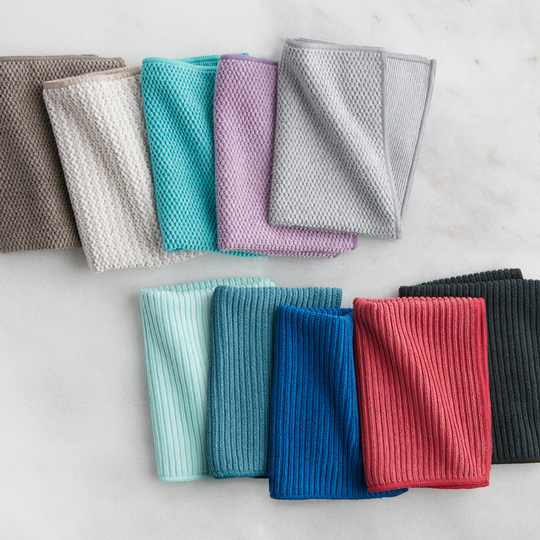
Why my opinion changed
My older Kitchen Cloth and Kitchen Towel reviews were mixed because the older products were mixed in my own routine. I found uses for the Channel Weave towel, especially as a hand towel, but it did not absorb enough water to become my favorite dish-drying towel.
The Diamond Textured version changed that. The patterned weave has the absorbency and quick-drying performance I wanted from the beginning. The cloth also has enough texture to grab everyday kitchen messes without feeling bulky.
I do not think honesty means pretending every version has always been equally good. It means telling you which version I would spend my own money on today. My five-star rating belongs to the current Diamond Textured Kitchen Cloth and Towel—not the older Channel Weave.
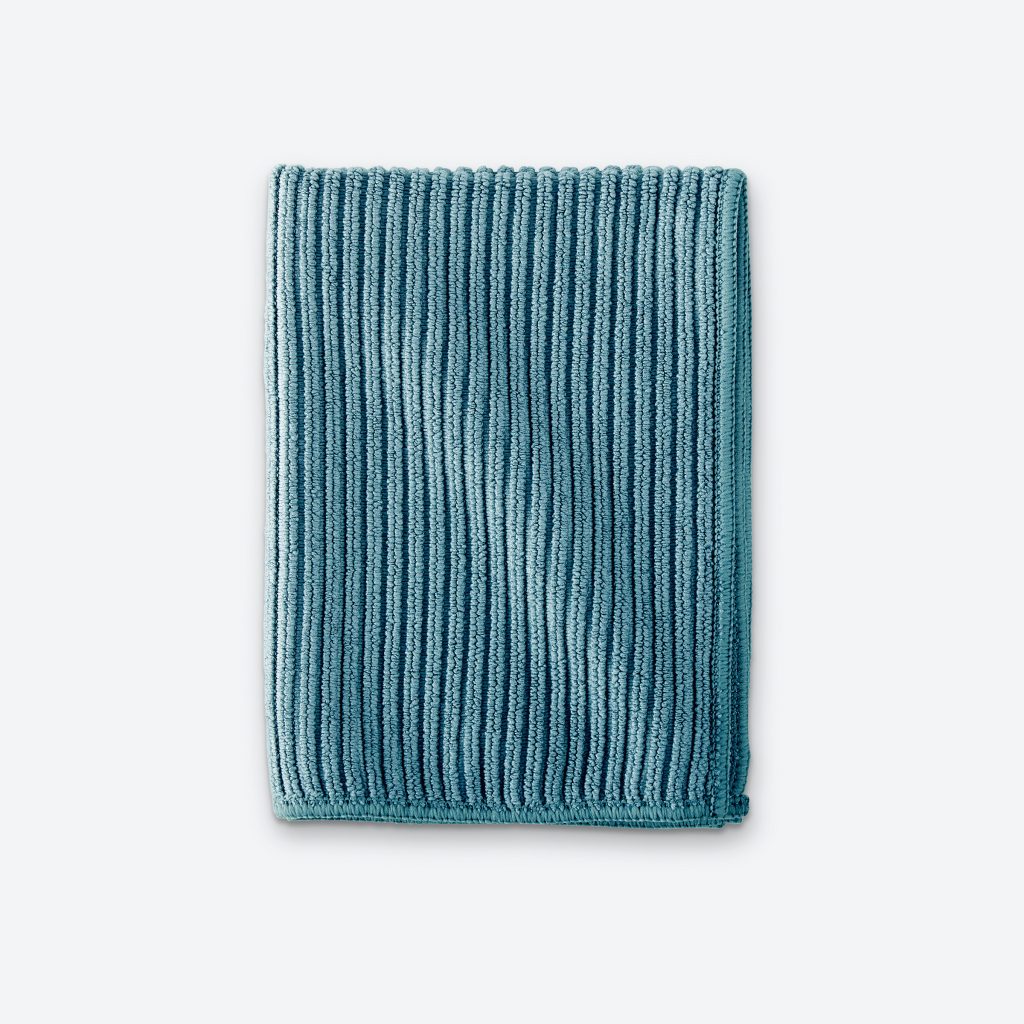
How the Diamond Textured Kitchen Cloth performs
The Kitchen Cloth is the workhorse of the pair in my kitchen. I dampen it with water, wring it well and use it for the messes that happen all day: crumbs after breakfast, grease near the stove, a sticky place on the table, splashes around the sink and a quick wipe of the counters.
The textured weave gives it the grab I want for crumbs and everyday soil. I fold the cloth so I can turn to a clean section as I move through the kitchen instead of wiping every surface with the same loaded side.
The current cloth is approximately 13.78 by 10.24 inches and is made with 70% recycled microfiber yarn. It is soft, absorbent, quick-drying and non-abrasive on most hard kitchen surfaces when used as directed.
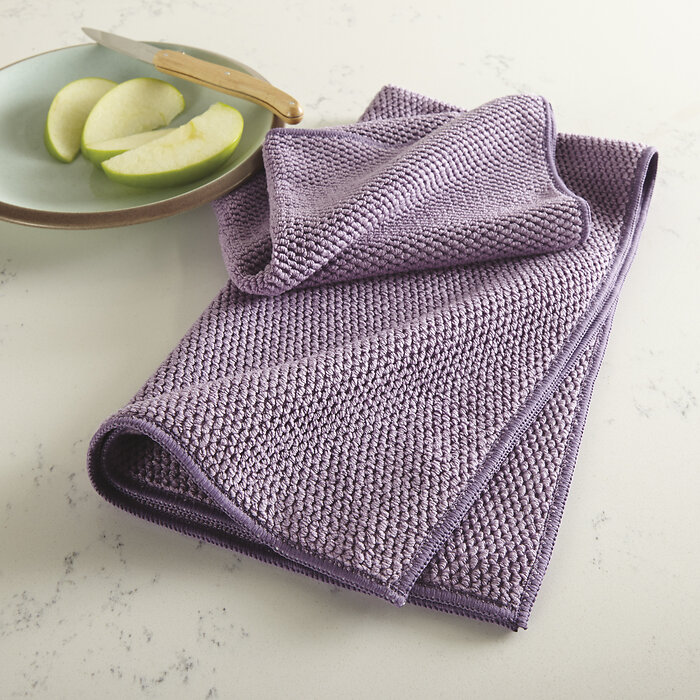
How the Diamond Textured Kitchen Towel performs
The Kitchen Towel is much larger—approximately 25.59 by 13.78 inches—and this is the piece I reach for when water is the problem. I use it to dry dishes, dry my hands and pick up the last bit of water around the sink after the cloth has done the cleaning.
It feels different from a thick cotton towel, but the current Diamond Textured towel is far more useful to me than the old Channel Weave. It absorbs well after its first wash and dries faster than a heavy towel when it is hung open instead of left in a damp heap.
If a new towel seems less absorbent than expected, wash and dry it before judging it. If an older towel starts repelling water, product residue is more likely than a sudden failure of the microfiber. I explain how to troubleshoot that in the care section below.
Where the netted Dish Cloth fits
This is the distinction I wish every new customer heard before ordering: the Kitchen Cloth is not the same product as the netted Dish Cloth . I use the Kitchen Cloth for surfaces. I use the open-weave Dish Cloth inside the sink, especially when food needs to rinse cleanly out of the cloth.
Could you put the Kitchen Cloth in soapy dishwater? Soap will not automatically ruin it, and Norwex care instructions allow a compatible dish soap for washing lightly soiled microfiber. I simply do not think a dense surface-cleaning cloth is the best tool for keeping bits of food out of the fibers. For dishes, the netted cloth is the more practical choice.
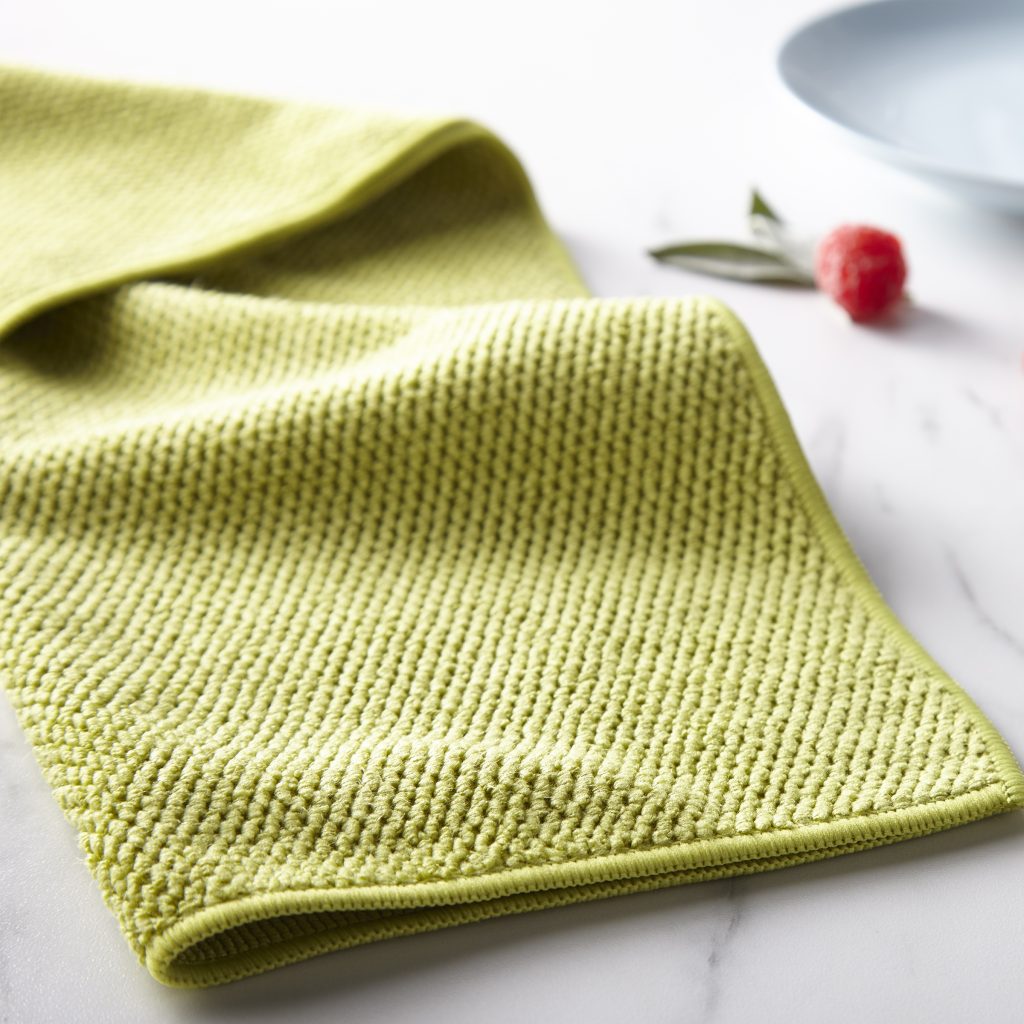
What BacLock does—and what it does not do
BacLock is useful, but it is also easy to misunderstand. It is antimicrobial protection built into certain Norwex products. Its job is to inhibit the growth of odor-causing bacteria, mold and mildew inside the cloth or towel so the product stays fresher longer.
BacLock does not disinfect your counter, kill germs on your hands or protect your family from illness. It also does not replace rinsing, complete drying or laundering after a dirty job.
Separately, properly used and cared-for Norwex microfiber can physically remove up to 99% of bacteria from a hard surface using water. Physical removal is different from disinfection. When a situation calls for a registered disinfectant or a specific food-safety step, use the appropriate product and process.
For a fuller explanation of the cleaning mechanism, read How Norwex Microfiber Works .
How I use the set
1. Machine wash and dry the cloth and towel before their first use, following the sewn-in care label.
2. Dampen the Kitchen Cloth with water and wring it well. It should be damp, not dripping.
3. Fold the cloth and turn to a clean section as it picks up soil. Rinse it when needed rather than pushing a loaded cloth across the next surface.
4. Use the Kitchen Towel dry for dishes and hands. I keep its job separate from the damp cleaning cloth.
5. Rinse the cloth after use, wring it out and hang both pieces fully open so they can dry completely.
6. Machine wash after extra-dirty kitchen work, and sooner whenever the cloth is greasy, visibly soiled, no longer rinses clean or develops odor.
I do not rely on a reusable cloth as the only food-safety step after raw meat. Follow your normal food-safety process and launder microfiber after an extra-dirty kitchen task.
Which surfaces can I clean?
The Kitchen Cloth can be used on most hard kitchen surfaces, including stainless steel, enamel, ceramic, glass, chrome, granite, marble, sealed wood, tile and china. Use the cloth damp and follow the surface manufacturer’s instructions.
Test first on brushed stainless steel, special coatings and surfaces that scratch easily. Do not use microfiber on anti-glare coatings. A product can be non-abrasive on most surfaces and still deserve a small inconspicuous test when the finish is unusual or delicate.
How to wash the Kitchen Cloth and Towel
• Before first use: machine wash and dry according to the care label.
• After light use: wash standard microfiber under warm running water with a small amount of Norwex Dish Soap when needed, rinse thoroughly and hang it open to dry or dry it completely.
• After extra-dirty kitchen work: machine wash.
• Laundry partners: wash separately or with other lint-free laundry; wash dark colors separately.
• Keep out of the load: bleach, fabric softener and dryer sheets.
• Detergent: Norwex recommends its laundry detergent for best results. Use only the amount needed and rinse thoroughly so residue does not build up.
• Drying: dry completely and follow the sewn-in label for the dryer setting.
My current How to Wash Norwex Microfiber guide covers the full routine, including the separate instructions for newer textiles that contain lyocell.

What if the towel stops absorbing or the cloth smells?
Do not assume the product is worn out. Too much detergent, fabric softener, dryer-sheet residue, trapped grease or incomplete drying can all interfere with performance. Start with a correct machine wash and a thorough rinse, then let the item dry completely before testing it again.
If odor or buildup remains, use my Stinky Norwex Cloths troubleshooting guide . I do not recommend inventing a boiling, vinegar, baking soda or oxygen-bleach routine when the current care instructions do not support it.
What I like—and what I would consider before buying
What I like
• The cloth and towel have clearly different jobs, so the set is easy to use once you understand the system.
• The Diamond Textured towel is more absorbent than the older Channel Weave towel I reviewed.
• Both pieces dry quickly when they are hung open.
• The cloth handles everyday kitchen soil with water, which keeps the routine simple.
• The current products use 70% recycled microfiber yarn.
What to consider
• The upfront price is higher than a basic cotton towel or cleaning cloth.
• The towel does not have the plush feel of thick cotton, so personal texture preference matters.
• Microfiber needs the right care. Fabric softener, dryer sheets and lint-producing laundry can reduce performance.
• The Kitchen Cloth may show stains even when it is clean. If cosmetic staining will bother you, choose color and tasks with that in mind.
• This is not one textile for every kitchen job. I still prefer the netted Dish Cloth for washing dishes.
Is the Norwex Kitchen Towel and Cloth Set worth it?
It is worth it for someone who wipes counters and spills every day, dries dishes or hands throughout the day, and is willing to keep the cloth, towel and dishwashing jobs separate. The set is the simplest first purchase because you get the two pieces that work together around the sink.
It may not be the best value if you strongly prefer a thick cotton towel, want one cloth to live in a sink full of suds, or know you will wash everything with fabric softener and dryer sheets. I would rather tell you that before you buy than promise the higher price automatically pays for itself.
For my kitchen, the current Diamond Textured pair earns five stars. The cloth is useful all day, and the towel finally performs the way I wanted a Norwex kitchen towel to perform.
My recommendation
Start with the Diamond Textured Kitchen Towel & Cloth Set if you need both surface cleaning and drying. Buy the Kitchen Cloth or Kitchen Towel individually if you already own the other piece or need a replacement.
If you are still unsure which cloth belongs in your kitchen, contact me and tell me what you are cleaning. I would rather help you choose one useful product than sell you three that overlap.
Disclosure: I am an Independent Norwex Consultant and may earn a commission from purchases made through my store. My recommendations are based on current product guidance and my experience using and helping customers care for Norwex microfiber.
Frequently asked questions
What is the difference between the Norwex Kitchen Cloth, Kitchen Towel and Dish Cloth?
The Kitchen Cloth is a damp surface-cleaning cloth. The Kitchen Towel is a larger drying towel for dishes and hands. The netted Dish Cloth is the open-weave option for washing dishes and rinsing away bits of food.
Can I use soap with the Norwex Kitchen Cloth?
Yes. Current care instructions allow Norwex Dish Soap when washing lightly soiled standard microfiber under running water. Rinse thoroughly. I do not keep the dense Kitchen Cloth submerged as my primary dishwashing cloth; I use the netted Dish Cloth for that job.
Why is my Norwex Kitchen Towel not absorbent?
Wash and dry a new towel before its first use. If an older towel repels water, look for detergent, fabric-softener or dryer-sheet residue and make sure it has been rinsed and dried completely. Persistent problems deserve troubleshooting before replacement.
Does BacLock disinfect my kitchen?
No. BacLock inhibits the growth of odor-causing bacteria, mold and mildew inside the product. It does not disinfect surfaces, clean hands or protect people from pathogens.
How often should I wash the Kitchen Cloth and Towel?
Let the soil decide. Rinse after light use and hang the item open to dry. Machine wash after extra-dirty kitchen work, and whenever the textile is greasy, visibly soiled, no longer rinses clean or develops odor.
Can I use the Kitchen Cloth on granite or stainless steel?
Yes, it is intended for most hard kitchen surfaces, including granite and stainless steel. Test first on brushed stainless steel, special coatings and easily scratched finishes, and follow the surface manufacturer’s instructions. Do not use microfiber on anti-glare coatings.
Purchase Products in this Post







Leave a Reply